Tuesday, December 3, 2013

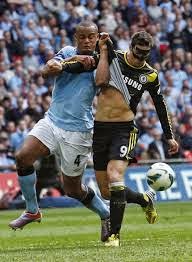
You Are Ruled By Your Weakest Link


Have you ever looked at your team and thought, 'We really need to work on that?' But because you only have so much time per practice session, you'd leave it for next session?

Have you ever been frustrated watching your team run around but make no progress in mastering the drill?

Have you ever had the feeling the drill is just not working and you should can it? But that was probably the practice plan that took the longest to plan wasn't it? So your told yourself you just needed to spend a little more time on it...?

I know the feeling. I saw my guys and it couldn't be more plain. They were scared to head the ball. We needed to work on it, but we didn't have time (that's what I told myself). We had a tournament in 4 days, and I had two sessions. There was so much to work on. So I compromised.

"It's okay to be scared. Let the ball bounce, then attack it. Even if it hits you, after the bounce, it won't be as painful." Those were my words of wisdom.

Come game day, the opposition's strategy, like mine, was to play to their strengths. They were tall. Every ball from their keeper, clearances, corners, throw-ins- all of them were played in the air. My tallest player was my goalie. My shortest players were in the midfield. Not only did they beat us because of their height, but because my boys were scared to head the ball, even those that were of a reasonable height that they could challenge, they didn't. Waiting for the ball to bounce was costing us the game.

What would you have done?


YOU'RE THE WEAKEST LINK

The fact it is, even with the best scouting, the strategies we approach the game with will not always be successful. Partly because they are largely based on everything going well on our end. Sometimes it's a defense minded strategy, at others, attacking too much and leaving gaps at the back. In our case, we would use the one-touch passing we had worked on- make them do the running. But the way they were playing the ball in the air, we didn't have a prayer of being on the ball long enough to get the passing game going. If we were to compete, we needed a new approach. If you cannot admit that you need a new strategy, then YOU are the weakest link.

It is a trap that we have all fallen into as youth coaches- designing beautiful plays that are sure to produce some galactico-like goals when the basics are not intact. The thing that causes these things to fail is not that they are poorly designed. They fall apart because the young guys don't know how to control a ball. They panic when they have to control the ball under pressure. Or as in my case, they are afraid to head the ball. How do you defend corners then? How do you attack corners? You might be thinking that you can't fix control in a single session, and for some kids, not even in a single season. You are right to think so. But think about it-


You will be ruled by your weakest link.


Your strategy is, more often than not, based on attacking your opponent's weaknesses. If you looked honestly, how many weaknesses does your team have collectively? What about your players individually? Now look at your practice sessions. What percentage of each session, and of your season's practice plans, is spent on addressing those weaknesses? It's human nature to gravitate towards those things we are already good at because it makes us feel good to see and feel success when we try anything. Fortify the house all you want- alarms, burglar bars on every window, secret key codes. If you continue to leave the door open, you will always be vulnerable. Those things you add will never make up for that weakness.


What I Did

I stepped up and told the boys I was wrong. It's NOT okay to be scared of the ball. I pointed out that we needed to make an effort. Courage is not born on the battlefield. It is built up gradually, each time against a bigger opponent. The biggest of those being yourself. I appealed to the young people they were. I knew that in saying BMX, skateboarding and hockey, I managed to describe them all. How many times have you fallen or been bashed into the boards? Yet you're still here. I won't lie to you and say it won't hurt. It will, but I need you to get up and keep playing. Make an effort. Jump and see what happens. Even if he beats you to it, make it so awkward that he can't do as he pleases with the ball.


THE SOLUTION

The first and most important step is a screening process. I'm talking about movement screening. This should precede performance testing. If you can't balance on one leg, you will have a hard time developing the speed and explosiveness required to be competitive. A well designed screen (like the FMS) will yield very specific information from which you can individualize warm-ups and homework for each player. How many coaches still have their athletes run laps around the field to warm-up? Drills and exercises that are tailored to your players' needs will give the team the tools they need to improve, not just an elevated heart rate. The good thing about screening a group of players is that in most cases, the majority will have the same needs. So even if you don't have the time or the resources to monitor twenty plus people doing different things, you can give them one or two drills to do. Building them off the screen, you are still sorting out your weaknesses.

Movement screening can explain why players have a hard time producing the power needed to compete for the header and/or develop knee problems when they land. It can tell you why there are recurring injuries. When the screen is clean, then you can do performance testing. Treat the results the same- ID the weaknesses. Address them in the warm-up, give them as homework. Too many coaches are afraid to encroach on their kids' time away from them. They leave themselves too much to do in the sessions they are already complaining are too short when they don't give homework.

Youth coaches are responsible for their charges in the alloted time of practice. That means coaches should arrive for a 5:00 session at 4:30 or sooner and leave only when the last child has been picked up. What are they doing in the time before practice begins and while they are waiting to be picked up after? They are already messing around with the ball anyway. Step in and give them instruction.

Every session after that game began and ended with heading. The drills involved heading. Every throw in was to be headed. I took corners and free kicks myself because my boys were not doing too well in directing their crosses. When the heading became decent, I focused on crosses until accurate crosses were attacked or defended with headers.

The solution is simple- identify your weaknesses and sure them up. Don't put fancy diagrams and drills on top of basics that are not basic. The best strategy is making sure that the basics are done right. Set the foundation. Put the basics on top of the foundation. Decorate the basics with the fancy stuff.

Friday, November 15, 2013

The Side lunge with Overhead Press


This is hardly an invention and if it is, it's nothing as monumental as the invention of the wheel. But the side lunge with an overhead press is one of my favorite exercises for a number of reasons.
  1. It can serve as a screen much like the Turkish get up (kelosthenos version as taught by Gray Cook and Functional Movement Systems). 
  2. It's definitely an advanced exercise (who doesn't want to be called advanced!) Following the idea that asymmetries are risk factors, this exercise is compound in nature but still offers that appraisal of the left and right sides. So if one side catches you out, you can simply stick with it until you have managed to correct the areas that are lacking before you progress. 
  3. It offers mobility, strength, and power work simultaneously. 
  4. I think it qualifies as a self-limiting exercise. 

THE MOVEMENT


The move is basically a side lunge and an overhead press with the same side arm. When I teach the side lunge, I'm looking for the side view to be identical to what I would see when doing a squat. For the sake of clarity, I'll go over the parts of the squat that are related to this movement.

Typically, we want the butt to be going back and down. The initial backward movement gets the hips into flexion. The knees will also go into flexion as you drop your butt towards the ground. Because the ankle is in plantar flexion, the squat is often referred to as a triple flexion pattern.
The secondary reason for describing the movement as the butt going back and down is because the rearward movement takes the femur (thigh bone) with it so that when it flexes, it does so without tracking ahead of the toes. There will be some movement of the knee towards the toes, but it should be minimal and not end up in front of the toes. 

Similarly, there should be minimal if any tracking of the knee medially. The coming together of the knees as if they are going to touch is called knee valgus and is undesirable. When this happens under load, the foot pronates and we see the outside of the foot on the side of the small toe come up. It's also a fairly common observation in jumping sports, particularly among female athletes. Both conditions (heavy load and high speed) predispose athletes to ACL injuries. Read more about that in this post. 

The heels should stay grounded throughout the movement. This is not too difficult if you sit back and down into the hip. I have separated this point from number 2 because this is a major stress point in the side lunge with the overhead press. Even people that have good squats have a tendency to lean forward in a side lunge, either lifting the heel or allowing their knee to track ahead of their toes. 

The last part I want to highlight is that the triple flexion if of the lower body only. A lot of people lack the back extensibility and the flexion in the hip to go below 90 degrees of a squat. They compensate by bending forward- dropping their chest towards the ground. This should be minimal, if present at all. One way to get a feel for what should be happening when you squat is to lie on your back and raise your knees towards your chest. Obviously, because you are on the ground, the back does not move at all. All the flexion has occurred at the hips, knees and ankles. 

The overhead squat requires all the aforementioned parts. On addition, there is an opposite appraisal going on in the upper body. Whereas there is triple flexion in the lower body, there is extension of the thoracic spine which allows the hands to go overhead without dropping the chest down. 

AS A SCREEN


This move is little more that an overhead squat looking at one leg and one arm at a time. Therein lies it's strength. It's weakness is of course that it is an advanced movement. Not everyone will be able to do this.

It challenges extensibility of the thoracic spine in the demand to press the weight (or simply raise an arm) over one's head. In the same aspect as we look at the arm going overhead, we assess shoulder integrity. Internally rotated shoulders make this move difficult. The mobility lost in the shoulders will have to be found somewhere. Usually this will be in the forward tracking of the knee with the heel lift.

I've had complaints of discomfort in the low back while doing this. In one person, the discomfort went away immediately after reinforcing that he 'sit lower into that hip'- effectively, keep the heel down while pressing. In someone else, she was able to do it with no discomfort after just a minute on floor running the foam roller across her back.

MODUS OPPERANDI


  • Hold a kettlebell in the rack position, with legs together. 
  • Step laterally, wider than shoulder width. Keep the toes pointing straight ahead. 
  • Descend into a side lunge on the same side as the racked kettlebell. Remember the triple lower body flexion. Stay as tall as possible in the upper body. 
  • Once stable, press the kettlebell overhead. Extended the unburdened arm in whatever direction for added balance. Cycle a breath with the kettlebell overhead before eccentrically bringing it back to it's racked position. 
  • Return to the starting position. 


The exercise is designed for both sides of the body so perform an equal amount on the other side with the same type of form. Small changes can make a big difference in this move, as I have already shown. Pay attention to those small things. Stay where there are issues until you have mastered them.

Expect a level of core challenge as you go through the exercise. It features the 'changing levels' idea as you descend squat-like into the side lunge. The elevation of the kettlebell overhead changes the center of gravity, effectively pulling it up. Poor core stability and strength will be caught out here. I mentioned that shoulder integrity is scrutinized as well. As with any exercise that involves a weight overhead, many will thrust the chin forward as they press. Try to achieve the finish position while keeping the neck packed. Similarly, the scalenes, sternocleidomastoid and the other neck muscles should not suddenly make an appearance. Always try to keep the neck area tension free when lifting weight. If they do, they are making a contribution to the stability process and they should not be.

Sunday, October 20, 2013

Injury in Soccer is Predictable

A study considering the FIFA World Cups (TM) 2010, 2006 and 2002 has revealed some telling information concerning injury. Smart coaches will also be able to garner injury prevention tips.

First to note is that the study considered men's soccer but there is no reason to believe that it would not be true for women and youth players. Secondly, although injuries on this case refer to the physical, much of what is discussed is from a psychological and emotional perspective. There is no doubt that matches are won between the ears first, then on the pitch. This means coaches have a greater responsibility towards the psyche of their athletes that a few motivational words at half time. Confidence, faith, calm, focus- these are all matters of the mind and if mastered will be evident in how they play.

Here are some of the statements from the study which will be published soon in the British Journal of Sports Medicine later this month.

"Male football players are at a greater risk of injury five minutes after a card has been given or after a goal has been scored."

For those who have been in the game for a while, we have heard the saying that a team is most vulnerable just after scoring a goal. We have heard much less about the injury risk increasing after a card has been given. The common thread- emotional upheaval.


"One theory is that players lose their concentration following disruptive breaks in play, which then increases the risk of injury," says Jaakko Ryynänen, one of the researchers. Sadly, diving is rampant in our sport. As are other attempts to get the opposition booked. It was a positive move by new Manchester United boss David Moyes to publicly critique Ashley Young for simulation, trying to win United a penalty, even after he had been yellow carded. But sometimes, the free kicks and penalties are given. The injustice of it is unsettling both for players and managers. It is not unheard of for managers to be fined after matches for continuing to question refereeing decisions. On the field of play, however, players lose their concentration. An innocuous challenge has been deemed sinister and that player has to tread carefully the remainder of the game. For your holding midfielders who are generally involved in the meaty tackles that disturb attacks, they have to rethink their approach. Often this makes them less effective. Of course, there is the simple reaction of increased aggression to try and right the wrong by 'committing the foul I've been booked for.' Sometimes there is no aggressive reaction, but simply late or mistimed tackles simply because that natural rhythm has been disrupted by thoughts of what has just happened.


There many ways to lose a game. A second yellow. Failure to refocus quickly and conceding another goal. Loss of cohesion following injury to a player. The psychological blow when that injured player is a van Persie or a Messi. The bottom line, if you lose you head, you lose the game. Within the next few minutes actually. "Injury frequency increases within a five minute period after a yellow or red card is issued, and following injuries and goals." Remember that this is a pattern observed over the last three World Cup tournaments. While this window represents the most emotionally volatile period of play, thus being ripe for injuries, it is simultaneously the time when teams are most vulnerable to conceding. This last conclusion is my own but it is not too difficult to see the connection. While it may not be true in every case, pressing home the advantage presented by the momentary unraveling of the emotional and psychological fabric of the opposition could be very lucrative in terms of the score line.


Surprise Surprise


One of two surprising findings of the study is that- "The frequency of player injuries also increases when their own team is in the lead. These are the findings of researchers at the Sahlgrenska Academy. This is not all that difficult to conceive though. Being in behind forces a team to play more aggressively in search of an equalizer increasing the risk for players on the leading team.

Turning their attention to the losing team, the researchers went on to suggest that the pressure of being behind does not increase injury risk evenly among players.

"One possible cause is that the results of any one match are very important in international tournaments. This may accentuate the role of the strikers, leading to increased pressure on them," says Jaakko Ryynänen.

In essence, both winning and losing increase injury risk as a result of increased aggression.


The second and most surprising finding published in the article is that injury frequency INCREASES when there is a longer break between matches.

"It sounds contradictory that the risk of injury increases with longer recovery times, but our theory is that this may be due to players losing their focus on match games after a break of several days. Perhaps teams also play at a higher level of intensity after they have rested for a number of days and have more energy."


These serve to to show one thing- that injury is variable in its causes. After all wouldn't we expected that better rested players would be MORE focused? having had time to redirect their energies? It certainly rules out the contributions that fatigue might make, but as the researchers theorize, it means more energy, higher intensity and therefore greater risk of injury.


I believe coaches should be in the business of risk management as much as in producing results. After all, how can you win if your players are all injured? Being able to read the signs that are predictive of injury and managing them well may very well be the deciding factoring winning championships that nobody really talks about.


The article "Foul play is associated with injury incidence: An epidemiological study of three FIFA World Cups (2002-2010)" was be published in the British Journal of Sports Medicine on 15 October.

Sunday, October 6, 2013

Expert Practicing Techniques

You only have to sit down for a few minutes in front of the TV before you see something or other offering you a shortcut to success. As a personal trainer, I can't even begin to talk about how often I see a commercial on some nutritional product or workout equipment that promises the results you want in record time. And we eat that stuff up! I bet you, or someone you know has a treadmill in their basement that gathering dust. But we all know the truth. Whether you want to consider the cliches circulating in the fitness and business worlds, or look at your own life, it is painfully obvious- becoming exceptional at anything requires time and effort. Excellence demands consistently approaching the task at hand with discipline.

Vacillating between these two positions we are aware of (shortcuts vs. staying the course), we invariably fall into the world of anything is better than nothing. So we get strapped, get onto the field and kick ball after ball, run lap after lap, perform drill after drill. At the end of it, we are no better than we were before, but at least we can tweet, "Just finished my workout today." All we need to do is convince ourselves that we spent some time practicing-we have the sweat to prove it. Whether anything is really better than nothing at all is a debate for another post. A more pressing one is, what do those players who spend the same amount of time practicing do in their practice sessions that makes them that much better than us?


For 3 years I played soccer in a league in which the teams were rotated every season. I was privileged to be considered one of those players who were "core" and therefore not available for other teams to select me, just to avoid all the better players ending up on the same team. Despite this status, I was not always first pick on that team. I played where I was asked to play after after the selectors, who also played, gave themselves and their friends their preferred positions, even if there was somebody better. Playing alongside guys that had been friends for years, there was no chance of endearing myself to these guys in order to make them put me in the first 11 on the same basis. I had to put in the practice. So I started running earlier than anyone else. I spent more time in the gym while the other were quad biking and hunting. I even watched film, took notes, and went out to practice. I still wasn't picked on merit until the last season. Even then, there were guys on the team that despite being picked as friends, I felt they genuinely were better than I was. What was it that made them so good while practicing less? Talent? Talent Is Overrated!

Best vs. worst

Researchers from the City University of New York studied basketball players. Would they find a difference between the practice habits of the best free throw shooters (70% or higher) and the worst free throw shooters (55% or lower)?

Of Course!

Here are two for you to think about next time you are practicing or designing a practice session for your athletes.

Difference #1: Specificity

The best free throw shooters had specified what they wanted to accomplish or focus on before the made a practice free throw attempt. It wasn't enough to simply shoot a hundred times, or even get in as many as I can. They focused on where they were trying to get the ball- of the glass and in, or swish. Keep the elbows tucked.

The worst free throw shooters were characterized by more general goals – like “Make the shot” or “Use good form.” What is good form?

Side Note: As Morpheus said to Neo, "There's a difference between walking the path and knowing the path."


Studies like these inspire statements like, "Maybe the other guys didn't know that they had to keep their elbows in." In other words, perhaps the difference between them was knowing what good posture for free throw shooting was actually like. The researchers controlled for this by asking the players. They concluded that there was no significant difference between the two groups in their knowledge about what to do when shooting. Bottom line, its not what you know but what you do.
Difference #2: Taking Responsibility
The best free throwers were rated at 70% and better. For the 30% that they missed the mark, their self talk differed from those in the other group. Their attributions were just as specific as their goals. Thoughts like, "I'm not good enough," were more at home with the lower ranked shooters. Instead, the better shooters thought about the shot analytically. Whatever technical element contributed to the missed shot was addressed in the next shot. Thus, they learnt from every trial, each error becoming the specific goal for the next attempt.

Good players also take responsibility for their performances. Its never about the wind or how good the opponent was. The fact is, those environmental factors are exactly the same that their opponents are facing. They simply were more adaptable, adjusting as needed to these external influences- in other words, they considered what they could not change, focused on what they COULD change (their approach) and learnt as they played.

Practice then does not end during 'practice,' neither is learning limited to when we are running plays and drills before a game. Every shot, every pass, every run is an opportunity for learning. The better players recognize the cues offered and make use their knowledge to think, plan, and direct their practice time more productively.

Next time you are out on the field, act (and think!) like an expert, and soon, you will become one!

Related Articles:

http://thegamebeautiful.blogspot.ca/2012/06/feedback-in-practice.html

Thursday, September 19, 2013

How To Succeed in Football


Sir Alex Ferguson, after an astounding quarter century at the helm of Manchester United, with multiple trophies, gave an interview with the Harvard Business Review. That article can be found here. They applied his wisdom to the business world and this is my attempt at using the same from a training point of view. After all, the great man was a soccer coach/manager.

1. Start with the Foundation

The foundation is movement. The heroes we have display amazing speed and skill, but underlying these are basic movement patterns without which they would not be where they are. These include rolling, crawling, squatting, lunging and single leg stance. Functional assessments can show the coach/trainer whether these are intact of compromised in very little time with little equipment necessary. I use the FMS and because it has been used as an predictive/injury prevention model, it is a useful tool to have. I discuss the merits of movement screening here.

Kiesel et al, (2007) have shown that asymmetries that are unattended to in the preseason invariably lead to injuries during the season. Coaches cannot afford to ignore the findings of the FMS then, but perhaps most importantly, they cannot afford to NOT screen their players. Once again, the FMS is a predictive tool. If you can predict, using a simple screen, who is going to get injured before they do, why wouldn't you do it? And once you knew, why wouldn't you take those players aside, address the red flags? The answer to the first question, you can answer for yourself. The answer to the second, I'll throw in a quote from Sir Alex- "The first thought of 99% of [newly appointed] managers is to make sure they win—to survive... That’s simply because we’re in a results-driven industry."

But, "Winning a game is only a short-term gain—you can lose the next game." Start with the Foundation.


2. Dare to Rebuild Your Team

Is that whole 'Money Ball' thing realistic in soccer? There is no doubt that money has changed our game. Manchester City, Chelsea, Real Madrid. These clubs have spend BIG in the recent past, to bring in the best players, but not always with the greatest success. Yet there is no comparison between their performances and those of other clubs without as much money to spend in the transfer market.

In a completely philosophical discussion, since we will always be in a results-oriented industry (will we?), I propose a rebuilding of the team based on the quality of movement as demonstrated by the movement screen. Sure, it doesn't follow that if a person can squat they can kick straight. What does follow is that movement capacity built over a solid foundation provides the player with the buffer needed to pursue greater levels of strength, speed, power, etc with minimal injury risk. Compromised movement patterns show themselves, if pressured, in orthopedic complaints (painful knees for example), groin injuries, issues in the ankles, calves, hamstrings, back pain, even shoulder, bicep and elbow injuries. Without screening though, asymmetries and imbalances remain unnoticed and as coaches, we see laziness, players who are not working hard enough, players who are not conditioned. Instead of realizing the true source of the limitations, we demand more conditioning, more running, more plays. And, in this results-driven climate, even players who are not fully recovered from injury are thrust back into action before they are ready.

But who in their right mind would look at the a player and see a person, not the number of goals they can score? Who in their right mind would consider the season, and pick their players with the season in mind, instead of just the game? Who in their right mind would hold back their best players until their movement patterns are restored? Who in their right mind would pick a slower player scoring a 14 on the FMS when a faster player with a higher score is available for selection? Yet according to Ferguson's formula, Dare To Rebuild Your Team. Could we 'Money Ball' a soccer team, picking the players with a good foundation movement pattern base, rather than just performance scores on our other tests? It would mean the durability of players. It would mean aggressive conditioning can be pursued without the players getting injured in training rather than in play. The practice of picking the best players obviously makes sense, but it is amazing to see how teams are almost unrecognizable when those players are injured and unavailable for selection.

Of course, with a good foundation, the second or third choice in a position is just as healthy and knows the playbook just as well. As one coach said, if both teams are matched on skill, we would win because we are better conditioned.


3. Set High Standards—and Hold Everyone to Them

For all I have said about a results oriented approach to the game, at the end of the day, the 3 points game by game are what its all about. Having coached a youth team, I know how readily players defeat themselves by simply looking at the schedule. Yet there is no doubt that persistence always wins out in the end.


  • At the 2013 U.S Open, I watched Tommy Robredo beat Roger Federer for the first time after 10 tries. 
  • No one expected it, but before all the footballing world, Senegal beat France in the 2002 Soccer Word Cup. 
  • Nobody could have envisioned the 6-1 thrashing Manchester City gave to Manchester United, nor indeed the famous 'Fergie time' victory over City which saw United walk away with a 4-3 thanks to a Michael Owen goal in the 6th minute of the four minutes extra time that was given! 

What's clear in these and other examples is that as long as we are willing to try, even if it is based on the faintest glimmer of hope, there is a chance that we will find success- sooner or later. But Sir Alex has gone beyond hope, to belief. You must believe that you can win, and inspire that in your team, no matter how illustrious the opposition. You do that by focusing on your both strengths (playing to them) and weaknesses (work on them until they are strengths too!). My approach is simple. Perfect practice- deliberate practice- makes perfect. There is a big difference between just kicking the ball 1000 times, and learning from each trial along the way.

In the Scot's words:"... we never allowed a bad training session. What you see in training manifests itself on the game field. So every training session was about quality. We didn’t allow a lack of focus. It was about intensity, concentration, speed—a high level of performance. That, we hoped, made our players improve with each session."


4. Never, Ever Cede Control

Although Sir Alex discusses authority in this section, I want to make a note on something which I do not allow in myself or my player. Never lose your temper. If you lose it, you lose the game. What matters is the win, not how big, tough or manly you are. Given that a player faces suspension after 5 yellow cards, to have any of those be for remonstrating with the referee is just plain stupid. The excuse, "It was in the heat of the moment" is unacceptable, and quite frankly, rather pathetic. Arguments, kicking and shoving and all that- those are always in your power to control, and getting yourself booked for those is unnecessary. Players invariably begin to miss tackles, time them late, or intentionally look to avenge themselves on something they think the referee missed. Keeping one's head down and getting on with it is the best way to go- let the football do the talking.

I have begun to pay attention to and enjoy the NFL. It is deplorable to see personal fouls, unnecessary roughness and other things clearly in a player's control cost the team 10 and even 15 yards. The one thing about it is, if you lose your temper, you can see your stupidity in numbers.


5. Match the Message to the Moment

I think a direct quotation will suffice in this case.

"No one likes to be criticized. Few people get better with criticism; most respond to encouragement instead. So I tried to give encouragement when I could. For a player—for any human being—there is nothing better than hearing “Well done.” Those are the two best words ever invented. You don’t need to use superlatives.

At the same time, in the dressing room, you need to point out mistakes when players don’t meet expectations. That is when reprimands are important. I would do it right after the game. I wouldn’t wait until Monday. I’d do it, and it was finished. I was on to the next match. There is no point in criticizing a player forever."


6. Prepare to Win


Previously, I have described the principle of specificity. Basically you should train the way you play. I have seen swimming coaches having their team RUN laps. I was part of a team that ran laps for 75 minutes under the pretext of cardio. Yet no one runs at the same pace during a game. Rarely do we run 50-60 yards in a match, and when we do we sprint, yet we had to pace ourselves to run 10 laps or more. A stranger looking in on the training session would never know whether we were soccer or rugby player. For all intents and purposes, we could have been marathoners for all the specificity we had.

Deliberate practice is about simulating, as much as possible, the conditions of actual play. It's about the feel, the pressure, the intensity, the decisions made under those conditions. Preparing to win complements the idea of setting high standards. The standard of winning and doing everything it takes to win requires that we prepare to win. Not just hope to win, not dream about it- but prepare for it. Its the reason we practice corners, free kicks, 1-v-1, 2-v-1, etc.

Anita Elberse writes: Ferguson was both unusually aggressive and unusually systematic about his approach. He prepared his team to win. He had players regularly practice how they should play if a goal was needed with 10, five, or three minutes remaining. “We practice for when the going gets tough, so we know what it takes to be successful in those situations,” one of United’s assistant coaches told us.

Sprint coach Charlie Francis said that his sprinters rarely set world records at meets. They did that at practice and simply repeated those performances on the big stage.


7. Rely on the Power of Observation

Just this week, a woman who is regularly in the gym arrived for a group training class. She was slightly less conversational than normal, slightly ashen but swore she was fine. As the class go under way, I noticed she was not cleaning in her usual manner. Her snatches were sloppy. Most of all, she was the first to change weights. She's about 65, regularly cleaning 12kg kettlebells in each hand. I watched her go down to the 8 kilos, then the 4's. I changed the exercise, and once she was a fraction of her usual self, struggling to do Turkish get-ups with a 4 kilo kettlebell.

It takes a special ability to be able to see beyond the obvious when it comes to your players. To see the performances you get and be able to understand the reasons behind them without having the athletes confess anything to you. A good coach knows when to push the player, to ask for more from them. He also knows when to back off. Sometimes, given the physical and psychological condition the athlete shows up in, training time is not only wasted time, it could be destructive.

When everybody else went off on a short break before the class proceeded, I asked her what was going on. She's running a 10k this weekend. She said she was nervous about it. More than nervous- she was having nightmares. She tossed and turned about not finishing, about getting lost and having people sent out to find her. Those people couldn't find her. Hers was a case of anxiety, lack of sleep, low energy, and maybe even overtraining. Once again, without observational skills, she may have just been lazy. Demand more from her, she breaks down, she gets injured. This, as they say, is the art of coaching.

Ferguson: The ability to see things is key—or, more specifically, the ability to see things you don’t expect to see.


8. Never Stop Adapting


Ferguson: But I always felt I couldn’t afford not to change. We had to be successful—there was no other option for me—and I would explore any means of improving. I continued to work hard. I treated every success as my first. My job was to give us the best possible chance of winning. That is what drove me.

References


Kiesel, K Plisky, PJ and Voight, ML. (2007). Can Serious Injury in Professional Football be predicted by a Preseason Functional Movement Screen. N Am J Sports Phys Ther. August 2(3): 147-158.


Sunday, August 4, 2013

Applying the FMS Model to Soccer: SLS


Core stability is also of vital importance for soccer, with athletes weak in this area at increased injury risk. Review my article "Why Soccer Players Need Abs" for an introduction to the subject. Briefly, I highlighted the fact that because our sport is unilateral, the kicking side is capable of producing some serious power. The problem comes in that the stance side is often ill-equipped to handle that much power. This asymmetry is the genesis of many groin and hamstring injuries.


The key word is asymmetry. It means an imbalance- whether it be of flexibility, strength, endurance or power. For those coaches, like myself, without the benefit of fancy equipment for testing purposes, the Functional Movement Screen is a helpful tool. One of the tests is a leg raise, otherwise known as single leg stance (SLS). It is one of the seven tests because 'our species requires it,' according to FMS creator Gray Cook. Single leg stance is the basis of every stride we take and as such, what it indicates must be considered seriously by anyone wishing to not only increase performance but also minimize the risk of injury. (Please note that the use of the entire FMS is encouraged.)


To be considered 'normal', an athlete needs to be able to perform SLS for approximately 20 seconds (ref: Gray Cook, interview with Joe Heiler). Since I started to use the FMS, I have seen people accomplish this with relative ease on both the left and the right sides. Others have not shown as much stability, shifting all over the place, torso's bending laterally in an attempt to balance. Others still, being unable to hold the position for 5 seconds, adopted an anterior pelvic tilt (pictured below).


While players need not hold the position for 20 seconds, what the failure to perform well on this test is important for several reasons:

  • This is performed when the athlete is stationary. 
  • Weather conditions are negligible. 
  • The test is performed without the perceived or real threat of an opponent. 
  • All of these contribute to an risk free environment. 


So what does the failure to perform satisfactorily suggest?

  • Poor static stability 
  • Poor pelvic control 
  • Altered motor patter behavior 
At minimum, these are related to poor core function. More detailed analyses would suggest altered glute and hamstring function, issues with the ankle, etc. What is important to realize when asymmetries are involved is that the other muscles that ordinarily take part in the movement are affected as well. The hamstrings end up doing extra work as the hip is tilted anteriorly. As is the case when a prone mover is asked to become a stabilizer, they develop unnecessary tone. There is no contribution from the glutes, a case known as gluteal amnesia. They 'forget' to contribute when the should, as much as the should. In previous articles here and here, I have discussed the role of the hamstrings and glutes during sprinting. Less than optimal function from both groups inevitable leads to reduced performance as well as increased risk for injury.

The FMS is then just a tool to highlight a problematic area. As coaches and trainers, we are then obligated to investigate those further if we are to keep our players off the injury sidelines and in the game following the playbook.

The plank is one way that coaches can use to further their investigation into the dys/functional core. As you do, take the basic principle of the Functional Movement Screen with you- you're investigating movement QUALITY rather than quantity. A 4-minute plank that is not set up properly is a waste of time. It will tell you nothing about how that core truly functions. Spend more time setting up the position and the plank will become both a test and an exercise.

Note the following key areas of a basic plank-

  • The body should be straight (as opposed to having raised hips or have them sagging) 
  • The upper body should be 'stacked'- the shoulders are directly under the body rather than out front. 
  • Imagine the rib cage is attached to the pelvis. Squeeze the glutes, quads and abs. 
  • Breathe! 

Bret Contreras has an in depth article on an effective plank here.

There are variations of course, including side planks. Side planks help in isolating the individual sides and assesses their contribution- are they pulling their own weight. Like most things in the FMS, we are looking for symmetry. If a player can hold a side plank in good form on the left significantly longer on the right than they can on the left, that is a problem as much as being able to do push-ups but not pull-ups is a problem.

It is important to be able to progress and regress an exercise. Putting together a sequence in which a player goes from a basic plank to each of the sides without a break is one way to take it up. On the other hand those who are having difficulty, the plank can be reduced so that it is performed from the knees. The question is, should soccer players be doing a plank from their knees?


References

Visit http://www.functionalmovement.com/ for more information on the Functional Movement Screen.

Tuesday, April 16, 2013

The Question of Returning To Play

“Early return to sport has poor odds for success and is likely to fail in a large proportion of cases.”


I coached a dedicated group of boys for two years. Their dedication was such that, even though I introduced some new techniques which were difficult for them; taught and held them accountable in ways that were different from what they were used to, they showed up to play anyway. At the end of my time with them, we won the tournament held in our backyard for the first time. A look back to those days...


Their dedication also extended to wanting to play, even when they were injured. One practice, one of my midfielders showed up with roadburn down his side- he fallen off his skateboard and slid a few yards. Another one was involved in a crunching tackle. We had to lift him off the pitch in the second of three games at a tournament for which we had woken up before dawn to make. two minutes later, he was doing his best impression of courtesy while demanding that I put him back on the field. There were many of these in the time I was with them; but this is not the impetuous spirit of 14- and 15-year-olds. I managed significant trauma to my own hamstrings during a match and insisted on playing the next match. It was six days from the first injury. Plenty of time to rehab- or so I thought. It was not until the 6 months had gone by, and the next season was under way before I was confident enough to sprint the like I used to. The hamstrings were well and healed, but I kept thinking, "What if it happened again?"


Without reservation, this is an issue faced at the highest level, where players need to play to keep their spots on the team, and managers need them to play to win championships. The result is players and managers who have to deal with the frustration of injury and re-injury.


Function vs. Time- When Can I play...


While research shows that regeneration would still be ongoing up to and over 3 weeks since the initial injury, early return to sport is often proposed when players have suffered a hamstring injury. It is no wonder that the recurrence rate for hamstring injuries is so high. Part of the issue is that hamstrings have been shown to be most susceptible during the late swing phase of high speed running/sprinting. Jogging with barely a burst of speed constitutes most of the 'tests' that athletes have to pass before being allowed to return to play. However, the eccentric capacity of the hamstrings is not tested under these conditions. Team practices are very controlled with less competitiveness, speed and the kind of muscular fatigue that players experience during actual match play. Therefore, even when players 'successfully' navigate practice, they may still be unprepared for the rigors of first team play. Indeed, complete recovery could still be months away. Peterson at al, (2010) suggested that a player with a recent hamstring has 15 times the risk of injury in a match as he or she does a training session. According to Askling et al., (2006) Isometric hamstring muscle strength in sprinters was 70% (2 weeks), 85% (3 weeks) and 90% (6 weeks) that of the uninjured limb after an initial hamstring muscle injury. A range of 6-50 weeks was observed before the same set of players felt they were back to the level they were before getting injured. Both athletes and managers report reduced performance when players return to play early, both in a physical and mental capacity.

Specific criteria need to be established before players can return to play, measures that can help determine the readiness of players to resume play, and thereby reducing the risk of re-injury. These will measure how well the hamstrings perform in a fashion akin to that of competition (function) rather than being based on the question of how long its been since the incidence of injury (time). The following have been proposed:

  • Hamstring strength recovery 
  • Hamstring flexibility 
  • H:Q ratio 
  • self-reported insecurity/pain during ballistic hamstring flexibility movements (Askling's H-test) 
  • high-intensity running performance 


Other tests certainly exist at the highest levels where teams have physiotherapists, athletic trainers, fancy equipment etc, which are not readily available to coaches like I was at U14/15. For those coaching at grassroots, the Nordic hamstring exercise is all but the holy grail. It requires no equipment, can be taught easily, and when used appropriately, has produced some spectacular results.

Can One exercise really make a difference?


The effects of the exercise on acute hamstring injury as well as on re-injury were investigated (Petersen et al, 2011) with 924 soccer players. In a carefully structured, progressively overloaded 10-week program, injuries both new and recurrences were reduced by 70% and 85% respectively. The investigators concluded that this preventive effect was solely due to the Nordic hamstring exercise. (Petersen et al, 2011) Moreover, the study showed that in order to prevent one re-injury, only three players at high risk (players with a hamstring injury in the previous year) had to perform the program. Thus, the number needed to treat (NNT), is much lower than the threshold considered acceptable in cardiovascular diseases or cancer where 10–100 or more is often celebrated (Slider et al., 2008) and around 90 athletes for ACL injury training programs, including neuromuscular work. (Grindstaff et al., 2006)


These findings concur with Arnason et al., (2008) whose own 10-week intervention produced a 65% lower injury incidence in soccer players. This intervention consisted of warm-up stretching, flexibility training and the Nordic hamstring exercise program, compared with a group performing warm-up stretching and flexibility training alone.

A 2002 paper by Croisier et al., reported a 100% success rate (no re-injury the following year) after introducing progressive isokinetic strength training (including both concentric and eccentric contractions), performed thrice weekly. This was continued until hamstring strength and eccentric strength deficits normalised from 4 to 10 weeks.


Why it works... briefly.


The Nordic hamstring exercise addresses the eccentric strength deficits which are undoubtedly present following injury, if not the cause of the initial injury. Recall that most injuries occur when the hamstrings are in their lengthened state (during eccentric contraction).

Taken together with Petersen et al's data, systematic and progressive eccentric strengthening has a large hamstring re-conditioning capability, most likely addressing eccentric strength deficits, (Crosier et al., 2002) muscle-tendinous atrophy and scar tissue, (Artalejo et al., 1998) certainly changing the injury risk profile of the athlete with a previous hamstring strain, even when addressed after a significant time period following the initial injury and rehab. (Peterson et al., 2011)


Bold summary

"It is thus incontrovertible that the Nordic hamstring exercise program reduces hamstring injuries. It could almost be considered negligent not to provide eccentric hamstring strengthening in this form for athletes with a history of previous hamstring injury (i.e, athletes at high risk of re-injury)."

Related Articles


Reference

Thorborg K. (2012) Why hamstring eccentrics are hamstring essentials. Br J Sports Med Vol 46:463-465


Artalejo FR, Banegas JR, Artalejo AR, et al. (1998) Number-needed-to-treat to prevent one death. Lancet  351:1365.

Askling C, Karlsson J, Thorstensson A. Hamstring injury occurrence in elite soccer players after preseason strength training with eccentric overload. Scand J Med Sci Sports 3:244–50.

Croisier JL, Forthomme B, Namurois MH, et al. (2002) Hamstring muscle strain recurrence and strength performance disorders. Am J Sports Med 30:199–203.

Grindstaff TL, Hammill RR, Tuzson AE, et al (2006). Neuromuscular control training programs and noncontact anterior cruciate ligament injury rates in female athletes: a numbers-needed-to-treat analysis. J Athl Train 41:450–6.

Petersen J, Thorborg K, Nielsen MB, et al. (2011). Preventive effect of eccentric training on acute hamstring injuries in men's soccer: a cluster-randomized controlled trial. Am J Sports Med 39:2296–303.

Silder A, Heiderscheit BC, Thelen DG, et al. MR observations of long-term musculotendon remodeling following a hamstring strain injury. Skeletal Radiol 37:1101–9.